

Time:2026-04-25 Views:0
A curved staircase with oak risers and treads is a timeless and luxurious choice, combining the natural beauty of oak with the graceful lines of a curved design. Oak is an ideal material for staircases due to its exceptional durability, hardness, and resistance to wear and tear—properties that make it well-suited for high-traffic areas. The rich, warm tones of oak (ranging from light tan to deep amber) and its distinctive grain pattern add warmth and character to any space, complementing a wide range of interior styles, from traditional and rustic to contemporary and Scandinavian. Oak risers and treads can be finished in a variety of ways, from clear varnishes that highlight the natural grain to stained finishes that match other wooden elements in the home, such as flooring, cabinetry, or furniture.
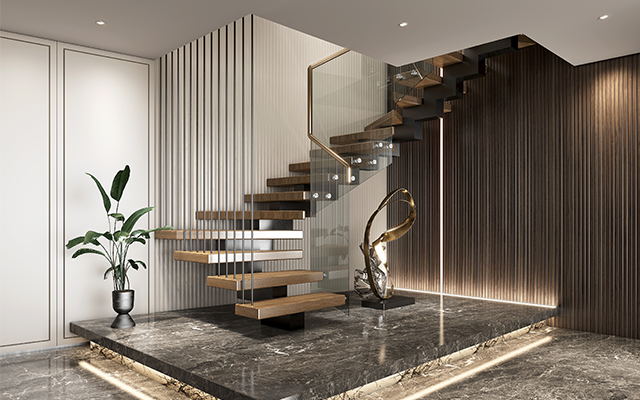
Beyond its aesthetic appeal, oak offers practical advantages for curved staircases. Its strength and stability make it suitable for the curved shape, as it can be carefully bent or cut to follow the staircase’s contour without compromising structural integrity. Manufacturers typically use solid oak or engineered oak for risers and treads; engineered oak is particularly popular for curved designs due to its enhanced stability, which reduces the risk of warping or shrinking over time, even in environments with fluctuating humidity. When paired with the right balusters and handrails—such as oak handrails to create a cohesive look, or metal balusters for a striking contrast—a curved staircase with oak risers and treads becomes a focal point of the home. To ensure longevity, oak risers and treads should be properly sealed and maintained, with regular cleaning and occasional refinishing to keep them looking their best. Additionally, non-slip treatments can be applied to the treads to enhance safety without detracting from the natural beauty of the oak.










 CN
CN