






Time:2026-04-13 Views:0
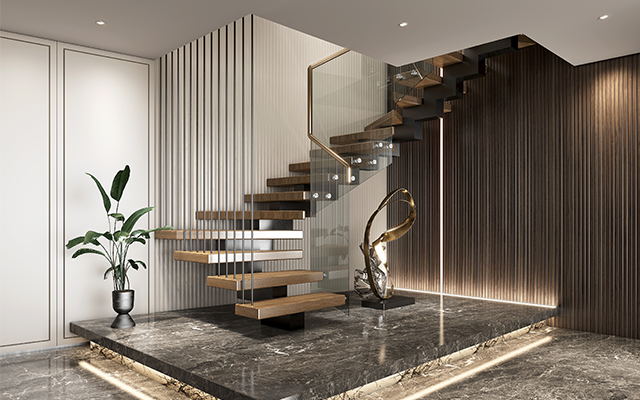
The weight capacity of a curved staircase is a critical safety parameter, especially for commercial hotels that accommodate high foot traffic, luggage carts, and occasional heavy equipment movement. Unlike straight staircases with uniform load distribution, curved designs have structural complexities—such as cantilevered treads, curved stringers, and concentrated stress points at the bend—that demand precise engineering. Typically, commercial curved staircases must adhere to industry standards (e.g., IBC in the U.S. or EN 1991 in the EU), which mandate a minimum live load capacity of 100 pounds per square foot (psf) for general areas and up to 125 psf for high-traffic zones like hotel lobbies. This capacity accounts for simultaneous occupancy by multiple people, as well as incidental loads from rolling luggage or maintenance tools.
To ensure compliance and safety, the weight capacity is determined during the design phase, considering materials (steel, concrete, wood, or composite), structural support systems, and tread dimensions. For example, concrete curved staircases offer higher load-bearing capacity (often 150+ psf) and stability, making them ideal for grand hotel lobbies, while steel-framed designs with wood treads can be engineered to meet 100–125 psf requirements with proper bracing. Regular inspections are also essential; hotel management should schedule annual assessments by structural engineers to check for signs of wear, such as cracked stringers, loose treads, or shifting supports, which can compromise weight capacity over time. Ignoring these factors not only violates safety codes but also poses significant liability risks for hotels.







 CN
CN