



Time:2026-07-28 Views:0
Modern-designed interior swing doors have become the mainstream choice for contemporary home and commercial interior decoration, perfectly balancing minimalist aesthetic concepts, efficient spatial utilization, and practical daily functionality. Different from traditional cumbersome, elaborately carved interior doors that pursue complex decorative effects, modern interior swing doors adhere to the design tenet of “simplicity is beauty”, abandoning redundant decorative elements, and focusing on smooth lines, neat shapes, low-key textures, and versatile color matching, which can seamlessly integrate with modern minimalist, light luxury, industrial, and Nordic interior styles. As the most classic and widely used interior door type, swing doors feature a simple opening and closing structure, flexible operation, and strong adaptability, and the modern design upgrade further endows them with higher ornamental value and spatial coordination.
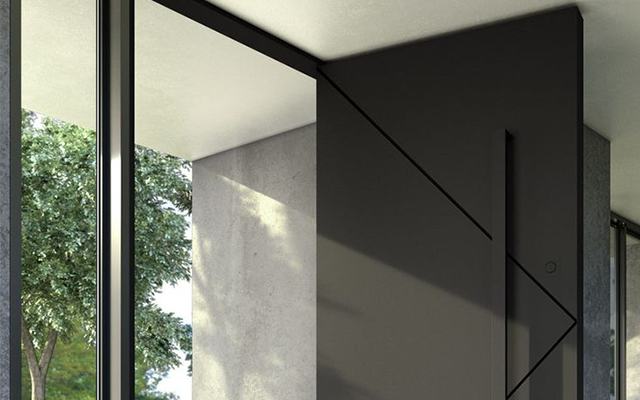
The core design feature of modern interior swing doors is streamlined minimalism. Most modern swing doors adopt ultra-simple flat-panel designs, with straight and neat door body lines, no complicated embossing, hollow carving, or fancy accessories. The door frame is usually designed with narrow borders or ultra-narrow invisible borders, reducing the occupation of visual space and making the overall space more open and transparent. Traditional interior doors often use wide door frames and multi-layer line decorations, which easily make the space appear cramped and old-fashioned, while modern narrow-border swing doors weaken the boundary between the door body and the wall, integrating the door into the overall wall decoration, creating a unified, clean, and high-grade interior visual effect. This minimalist design is highly inclusive and can adapt to various indoor spaces such as living rooms, bedrooms, studies, and corridors.
Color matching diversity is another major advantage of modern interior swing doors. Breaking the single solid wood color limitation of traditional doors, modern swing doors support rich and fashionable color schemes, including high-grade gray, pure white, ink black, warm beige, light coffee, and low saturation Morandi colors. These neutral and low-key colors conform to the modern aesthetic of pursuing simplicity and advanced sense, and can coordinate with different wall colors, floor materials, and furniture styles. For light-colored, bright and spacious modern homes, white and beige swing doors can enhance the sense of transparency and freshness of the space; for high-end light luxury and industrial-style spaces, gray and black swing doors can create a calm, sophisticated, and fashionable atmosphere. In addition, many modern swing doors adopt color-blocking design, matte finish, and frosted surface treatment, further enriching the hierarchical sense of the door body.
In terms of material selection and process upgrading, modern interior swing doors pursue environmental protection, stability, and texture coexistence. Most high-quality modern swing doors use solid wood keel frames matched with high-density environmental protection boards, supplemented by eco-friendly matte paint, baking paint, or veneer processes. This structural design not only retains the sturdiness and stability of solid wood doors, avoiding deformation and warping after long-term use, but also overcomes the defects of pure solid wood doors such as easy cracking and high price. The matte and frosted surface processes effectively avoid light reflection glare, bringing a delicate and comfortable hand feel and visual experience. At the same time, the modern door hinge and hardware accessories are upgraded to silent buffer hinges, which realize silent opening and closing, prevent slamming and collision damage, and improve the overall use texture.
Functional optimization makes modern interior swing doors more in line with modern people’s living habits. In addition to the basic opening and closing functions, many modern swing doors are designed with hidden door locks, invisible hinges, and integrated door panels, completely exposing no hardware accessories on the surface, making the overall shape more concise and neat. For different functional spaces, targeted functional designs are also available: study and bedroom swing doors are equipped with enhanced sound insulation cotton and sealing strips to improve sound insulation effect; kitchen swing doors adopt oil-proof and waterproof surface processes to adapt to humid and fume-prone environments; corridor swing doors use wear-resistant and scratch-resistant coatings to cope with frequent pedestrian passage.
Spatial adaptability is also a key advantage of modern interior swing doors. The flexible opening mode of left-opening and right-opening can be customized according to indoor space layout and walking habits, which is convenient for daily passage and furniture handling. Compared with sliding doors and barn doors that occupy special spatial structures, swing doors have lower requirements for wall space and installation environment, suitable for most household and commercial interior spaces such as apartments, villas, office buildings, and shopping malls. With the perfect integration of minimalist aesthetics, stable performance, diverse styles and practical functions, modern interior swing doors have become an indispensable decorative and functional component of modern interior design, leading the new trend of interior door decoration.







 CN
CN